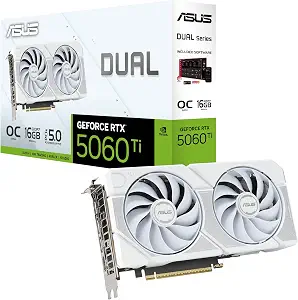
ASUS Dual GeForce RTX 5060 Ti 16GB GDDR7 White OC Edition Graphics Card
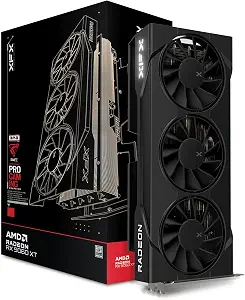
XFX Swift AMD Radeon RX 9060 XT OC Triple Fan Gaming Edition
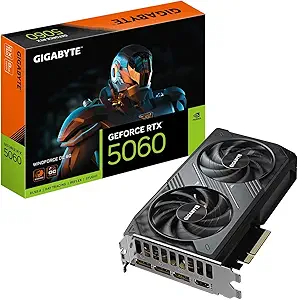
GIGABYTE GeForce RTX 5060 WINDFORCE OC 8G Graphics Card
Best Gpu Buying Guide — Black Friday Deals 2026
A graphics card shortlist should begin with the work you expect it to support, then narrow around memory, connections, cooling design, and the space available in your system. This guide covers three cards with different specification profiles: two GeForce options and an AMD Radeon model. Their listed details can help identify which deserves a closer look, but they do not establish how a card will perform in a particular setup. During Black Friday, compare the exact product variant and the complete listing rather than treating the event name as evidence of a discount. Check the details that matter to your build before deciding whether an offer is worth pursuing.
ASUS Dual GeForce RTX 5060 Ti 16GB GDDR7 White OC Edition Graphics Card
Check Price on Amazon
The ASUS Dual GeForce RTX 5060 Ti 16GB GDDR7 White OC Edition is the Best Overall pick in this guide because its provided details bring together a 16 GB memory specification, multiple display outputs, and selectable BIOS profiles. That label is an editorial choice among these listed cards, not a claim of tested superiority. For a shopper who wants to weigh memory capacity alongside output flexibility and configuration options, this is a useful starting point for a shortlist. Its white OC Edition identity is part of the exact variant to check when comparing Black Friday listings.
The card lists 16 GB of graphics memory and a GPU clock of 2632 MHz in OC mode or 2602 MHz in Default mode. Those figures describe the product’s stated specifications; they are not a guarantee of results in a particular game, application, or computer. The two clock figures also make it important to read the mode attached to each one rather than treating them as interchangeable. If you have a particular workload in mind, use its own requirements and independent compatibility information to decide whether the card fits your plans.
For connecting displays, the listed outputs are one Native HDMI 2.1b port and three Native DisplayPort 2.1b ports. Compare those connector types with the screens and cables you intend to use, and confirm any display-specific needs in the full listing. The card has a 2.5-slot design, so check the available space and layout in your case rather than assuming the card will fit. Its Dual BIOS feature lets you toggle between Quiet and Performance BIOS profiles; the names identify the available profiles, but the provided details do not quantify their acoustic or performance effects.
On Black Friday, compare this exact ASUS variant with the complete offer, including the product identity and listed specifications. Do not assume that another RTX 5060 Ti listing has the same memory, outputs, color, or BIOS features. Verify the final listing details and your system’s requirements before purchasing. If the combination of 16 GB, the stated port selection, and two BIOS profiles matches your priorities, this card merits consideration; if another requirement matters more, use that as the deciding filter.
Key specs
| Graphics memory | 16 GB |
| GPU clock | 2632 MHz (OC mode)/ 2602 MHz (Default mode) |
| Video outputs | 1 x Native HDMI 2.1b, 3 x Native DisplayPort 2.1b |
| Slot design | 2.5-slot design |
| BIOS profiles | Dual BIOS lets you toggle between Quiet and Performance BIOS profiles |
XFX Swift AMD Radeon RX 9060 XT OC Triple Fan Gaming Edition
Check Price on Amazon
The XFX Swift AMD Radeon RX 9060 XT OC Triple Fan Gaming Edition is the Best for a triple-fan cooling design choice. The label is grounded in its listed XFX SWFT Triple Fan Cooling Solution, not in a comparison of measured temperatures or noise. Shoppers who specifically want to consider a card described with a triple-fan cooling solution can use that detail as a shortlist filter, then check the rest of the build and listing requirements. Keep the full model name attached to any Black Friday comparison so that the offer corresponds to this specific Radeon variant.
Its listed GPU is AMD RX 9060 XT, with 16 GB GDDR6 memory. The product information gives a base clock of 1900 MHz and a boost clock up to 3320 MHz. The “up to” qualification belongs with the boost figure, and neither clock entry alone establishes performance for a particular task. Use these details to compare product specifications, while relying on the requirements of your intended software and system to determine whether the card is an appropriate candidate. The memory type and capacity are also useful points to verify against the exact listing.
The listed video outputs are HDMI 2xDP, and the interface is PCI-Express x16. Before choosing, check that the output description aligns with the displays you plan to connect and consult the complete product and system information for connection requirements. The provided facts do not give the card’s dimensions, so confirm its physical fit using the full listing and your case information rather than inferring its size from the triple-fan description. Likewise, a cooling design description identifies its arrangement, but does not establish the outcome in your own setup.
For Black Friday, compare the exact XFX product and its complete offer with other cards that meet your needs. Confirm that the listing still identifies the AMD RX 9060 XT model and the specifications you intend to rely on. Treat any offer as a candidate to verify, not as proof of a discount or a reason to overlook fit, display connections, or workload requirements. If the triple-fan design is a priority, this pick makes that feature easy to identify while leaving the remaining checks in your hands.
Key specs
| GPU | AMD RX 9060 XT |
| Memory | 16 GB GDDR6 |
| Boost clock | Boost Clock up to 3320 MHz |
| Base clock | Base Clock 1900 MHz |
| Cooling | XFX SWFT Triple Fan Cooling Solution |
| Video outputs | HDMI 2xDP |
| Interface | PCI-Express x16 |
GIGABYTE GeForce RTX 5060 WINDFORCE OC 8G Graphics Card
Check Price on Amazon
The GIGABYTE GeForce RTX 5060 WINDFORCE OC 8G is the Best Budget choice among the products in this guide. “Best Budget” is an editorial label for this selection, not a statement about its current price or a claim that it is the least expensive card on the market. Its listed specification set includes 8GB GDDR7 memory with a 128bit memory interface, PCIe 5.0, and a WINDFORCE cooling system. During Black Friday, use the exact model name to distinguish this card from other GeForce listings and check the actual offer details before making a price-based decision.
The listed GPU clock speed is 2512 megahertz. Read that as a product specification, not a promise about performance in a particular title or application. Its 8GB GDDR7 memory and 128bit memory interface are also details to consider in light of the requirements of the tasks you expect to run. The provided information does not establish which workloads will suit you best, so make that decision using the needs of your software and your system rather than a single specification in isolation.
For display connections, the product lists DisplayPort and HDMI. The provided description does not state a port count or a specific HDMI version, so check the complete listing if either detail matters to your screens or cables. The card uses PCIe 5.0, another item to compare with the system information relevant to your build. Its WINDFORCE cooling system and two fans are listed features; these facts describe the design but do not quantify temperatures, noise, or results. Dimensions are listed as 7.83"L x 4.57"W. Check the case’s available space and the complete product information before relying on those measurements for fit.
When browsing Black Friday offers, verify that the listing is for this GIGABYTE RTX 5060 WINDFORCE OC 8G rather than another card with a similar name. Confirm the 8GB GDDR7 specification, the listed outputs, and any other details that affect your build. Then compare the actual offer with your budget and requirements; the editorial label does not tell you what the live price is. This card belongs on a shortlist if its specific memory, interface, cooling, and dimension details align with what you need.
Key specs
| Memory | 8GB GDDR7 128bit memory interface |
| Interface | PCIe 5.0 |
| Cooling | WINDFORCE cooling system |
| GPU clock | GPU Clock Speed 2512 megahertz |
| Video outputs | DisplayPort, HDMI |
| Fans | Number of Fans 2 |
| Dimensions | 7.83"L x 4.57"W |
Separate must-haves from nice-to-haves
Before browsing Black Friday listings, write down the constraints that can rule out a card: the work you expect it to support, the displays you need to connect, and the physical space available in the system. Then distinguish those essentials from preferences such as a particular memory specification, cooling description, or card appearance. This order helps prevent a striking headline feature from distracting you from a practical requirement. The provided product facts offer useful comparison points, but they cannot settle every question about your setup.
Use the full product identity when organizing options. These listings cover an ASUS RTX 5060 Ti, an XFX RX 9060 XT, and a GIGABYTE RTX 5060. Similar naming or a shared manufacturer family should not be treated as evidence that two variants have identical specifications. Note the exact model and the facts relevant to you, then check the full listing and your system documentation for anything the supplied details do not answer. A short, prioritized checklist makes the Black Friday decision more deliberate without assuming an offer is compelling.
Choose specifications that answer a real need
Memory and clock figures can help distinguish these cards, but they are not interchangeable measures of suitability. The ASUS lists 16 GB of GDDR7 graphics memory; the XFX lists 16 GB GDDR6; the GIGABYTE lists 8GB GDDR7 with a 128bit memory interface. Consider those exact descriptions alongside the requirements of your intended programs. Do not infer that memory type or capacity alone settles how a card will behave in a specific workload.
Clock entries need their qualifiers too. The ASUS gives separate OC mode and Default mode figures, the XFX describes a boost clock “up to” a stated figure and also supplies a base clock, and the GIGABYTE lists a GPU clock speed. These are different descriptions, so avoid turning them into a simple performance ranking. On Black Friday, use specification comparison to narrow the field, then decide using your actual workload and the details available for the exact card. If a listing leaves a necessary question unanswered, seek confirmation rather than filling the gap with an assumption.
Trace every display path before checkout
A card’s output list is only useful when it matches the displays and cables you plan to use. The ASUS lists one Native HDMI 2.1b and three Native DisplayPort 2.1b outputs. The XFX lists HDMI 2xDP, while the GIGABYTE lists DisplayPort and HDMI. The descriptions are not equally specific, so consult the complete listing when port counts, connector versions, or other display details are essential to your plan.
Make a simple connection plan for the screens you expect to attach, and verify each relevant port against that plan. Do not assume that a connector label answers every display question; check the product information for any detail you require that is not listed here. This can be especially useful when comparing Black Friday offers with similar model names, because the exact variant—not just the GPU family—should determine what you verify. A card that appears suitable by name still needs to meet your particular connection requirements.
Treat cooling and fit as separate checks
Cooling descriptions tell you what the listing names, not what temperatures or noise to expect in your computer. The XFX specifies an XFX SWFT Triple Fan Cooling Solution, and the GIGABYTE lists a WINDFORCE cooling system with two fans. The ASUS lists a 2.5-slot design and Dual BIOS profiles called Quiet and Performance. Those are distinct design and configuration details; none establishes a measured outcome in your system. Use them to identify questions worth checking, not to predict results.
Physical fit calls for its own verification. The GIGABYTE dimensions are listed as 7.83"L x 4.57"W, and the ASUS is described as a 2.5-slot design. The provided facts do not supply dimensions for the XFX. Check the full product listing and the available space in your case before deciding that a card will fit. During Black Friday, a tempting offer should not replace that step. Keep the exact model attached to the fit information you verify so that you do not apply one variant’s details to another.
Make the Black Friday listing prove its relevance
An event label does not establish that a particular card is discounted, available, or a good value for your needs. Compare the complete Black Friday offer with the exact product variant you shortlisted. Confirm the model name and the specifications you care about, and review the final listing details before acting. This guide provides no live prices or promotion terms, so base any price decision on what is actually shown when you shop rather than an assumed saving.
A useful comparison weighs the offer against your priorities, not just against a headline or another card’s label. The Best Overall and Best Budget descriptions here are editorial distinctions among these products, not market-wide awards or proof of measured superiority. The XFX’s triple-fan label likewise identifies a listed design feature. If an offer changes the exact variant or leaves a key detail unclear, pause and verify it. Black Friday can be a convenient time to compare candidates, but the right choice still depends on fit, connections, requirements, and the actual listing.
Make your Black Friday choice
A careful GPU purchase starts with non-negotiables: intended workload, display connections, and verified physical fit. Use memory, clock, interface, and cooling details as comparison points, while keeping each specification’s wording and limitations intact. The ASUS, XFX, and GIGABYTE cards each offer a different set of listed details, so choose by how those details answer your own needs rather than by a label alone. On Black Friday, check the exact variant and complete offer before deciding. Treat a promotion as relevant only when its verified terms and product match make sense for your system and budget.