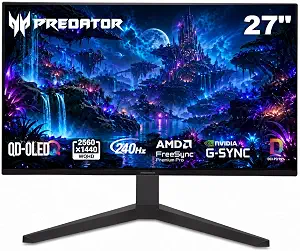
Acer Predator 26.5in QHD 2560×1440 QD-OLED 240Hz Gaming Monitor X27U W1
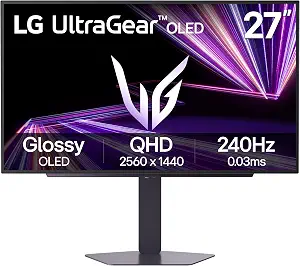
LG 27GX704A-B 27-inch Ultragear QHD (2650×1440) OLED Gaming Monitor 240Hz, 0.03ms, NVIDIA G-Sync Compatible, AMD FreeSync Premium Pro, VESA Display HDR TrueBlack400, HDMI 2.1, Disp
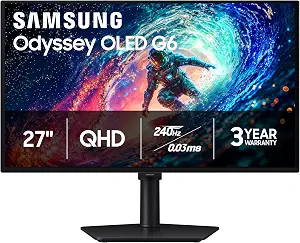
Samsung 27" Odyssey OLED G6 (G61SH) QD-OLED, QHD (1440P) Gaming Monitor
Best Oled Monitor Buying Guide — Black Friday Deals 2026
An OLED monitor shortlist should begin with the details that shape your everyday choices, not with a sale banner. These three gaming-oriented options pair QHD-class resolution with a 240Hz refresh rate, while differing in display type, screen finish, size, and listed adaptive-sync support. The Acer Predator is a 26.5-inch QD-OLED with a matte finish; the LG is a 27-inch OLED with a glossy finish; and the Samsung is a 27-inch QD-OLED with a matte finish. Those distinctions give you a practical way to narrow the field before Black Friday. Treat any Black Friday offer as a reason to check the exact model and configuration, not as proof that one monitor suits your desk or routine better.
Acer Predator 26.5in QHD 2560×1440 QD-OLED 240Hz Gaming Monitor X27U W1
Check Price on Amazon
The Acer Predator X27U W1 is the Best Budget pick among the featured monitors, an editorial label rather than a statement about its price or a current deal. Its listed combination is a 26.5-inch QD-OLED display, 2560×1440 resolution, and 240 hertz refresh rate. That makes it a clear candidate for shoppers who want to compare a slightly smaller listed screen size with QHD resolution and a high refresh-rate specification. The facts do not establish how it performs in any particular game, but they do give you concrete points for deciding whether its format belongs on your Black Friday shortlist.
A response time of 0.03 milliseconds and FreeSync Premium are also specified. Keep those items separate when comparing options: the response-time figure is one listing detail, while adaptive sync is a named feature to consider alongside your own requirements. The Acer’s matte screen finish may be a useful deciding point if you are choosing between it and glossy alternatives. Rather than treating matte as automatically preferable, consider whether that surface is the one you want in your space. These distinctions can make a Black Friday comparison more meaningful than focusing on a product label alone.
The listing gives two HDMI ports. If your setup depends on HDMI connections, check that the exact offer page describes the model you mean and provides the connection information you need. This is a practical verification step, not an assumption about other ports or included items, which are not established in the supplied facts. Similarly, the product name identifies the X27U W1; use that full model designation when comparing listings so that a similarly named monitor does not distract from the configuration you selected.
The Best Budget label is intended to help organize this three-monitor guide; it does not claim the Acer costs less, has a discount, or represents the lowest-priced OLED monitor elsewhere. For Black Friday, compare its actual offer with the exact LG and Samsung listings rather than relying on a “budget” label to predict savings. This Acer may make sense if your priorities include QD-OLED, a matte finish, FreeSync Premium, and the stated screen size and resolution. If you need a particular feature beyond those facts, verify it on the listing before treating the monitor as a match.
Key specs
| Display | QD-OLED Display |
| Screen size | 26.5 inches |
| Resolution | 2560×1440 |
| Refresh rate | 240 hertz |
| Response time | 0.03 milliseconds |
| Screen finish | Matte |
| Adaptive sync | FreeSync Premium |
| HDMI ports | 2 |
LG 27GX704A-B 27-inch Ultragear QHD (2650×1440) OLED Gaming Monitor 240Hz, 0.03ms, NVIDIA G-Sync Compatible, AMD FreeSync Premium Pro, VESA Display HDR TrueBlack400, HDMI 2.1, Disp
Check Price on Amazon
The LG 27GX704A-B earns the Best Overall label in this shortlist because its provided specifications bring several useful comparison points together: a 27-inch OLED display, 2560×1440 native resolution, 240 hertz refresh rate, and 0.03 milliseconds response time. These figures can help a shopper who wants a gaming-focused display with a clearly specified resolution and motion-related details. They do not, by themselves, settle whether the screen is the right fit for a particular desk, game, or viewing preference. During Black Friday shopping, use them as a starting point, then verify that the offer is for this exact model.
The monitor’s listed adaptive-sync support includes FreeSync Premium Pro and G-Sync Compatible. That gives shoppers who care about those named options concrete details to compare against their own priorities. The listing also specifies two HDMI ports, so you can check whether that connection count fits the devices you intend to connect. The product name includes HDMI 2.1, but the provided facts establish only the total HDMI port count; confirm the exact connection information on the offer page if a particular HDMI specification matters to you. This careful check is especially worthwhile when Black Friday listings present similar model names or configurations.
A glossy screen finish is another defining point in the supplied facts. If you have a clear preference for glossy rather than matte, that can help move this LG up your shortlist; if you are undecided, compare the surface choice with your room and viewing habits rather than assuming one finish is universally better. The listed display type is OLED, not QD-OLED, which also makes this a useful option for shoppers who want to distinguish panel labels while comparing products. No supplied information establishes price, current promotion, or other features, so leave those questions open until you inspect the exact listing.
For a Black Friday decision, the LG’s Best Overall label is an editorial fit within these three choices, not a claim of measured superiority or a market-wide award. It may suit someone whose checklist emphasizes a 27-inch OLED, the stated QHD resolution, both named adaptive-sync options, and a glossy surface. Before buying, match the listing’s model name and configuration to those priorities, and compare the actual offer terms with the other monitors you are considering. If the finish or display type is not your preference, the Acer and Samsung provide different listed combinations to weigh.
Key specs
| Screen size | Screen Size 27 inches |
| Resolution | Native Resolution 2560×1440 |
| Refresh rate | Refresh Rate 240 hertz |
| Response time | Response Time 0.03 milliseconds |
| Display type | Display Type OLED |
| Adaptive sync | FreeSync Premium Pro, G-Sync Compatible |
| HDMI ports | Total Number of HDMI Ports 2 |
| Screen finish | Screen Finish Glossy |
Samsung 27" Odyssey OLED G6 (G61SH) QD-OLED, QHD (1440P) Gaming Monitor
Check Price on Amazon
The Samsung 27-inch Odyssey OLED G6 (G61SH) is labeled Best for a matte QD-OLED shortlist. That description is grounded in two supplied details: its display technology is QD-OLED and its screen finish is matte. It is a useful option to compare if those two characteristics are already part of your preferred direction. The monitor is also listed as a 27-inch model with QHD Wide 1440p resolution, providing specific size and resolution details to weigh against the Acer and LG. The label describes its role in this guide, not a tested advantage over the other options.
For gaming-related specifications, the Samsung listing gives a 240Hz refresh rate, a 0.03 milliseconds response time, and FreeSync Premium adaptive sync. Read each as its own item on your checklist: a refresh-rate figure, a response-time figure, and a named sync feature are not interchangeable descriptions. The supplied facts do not say how a particular game or computer will behave with this monitor, so use these specifications to screen for the details you care about and verify any additional requirements separately.
A matte finish can help distinguish this model from the LG’s listed glossy surface, while its QD-OLED label provides another point of comparison with the Acer, which is also listed as QD-OLED. If you are shopping during Black Friday, this combination gives you a focused way to compare the exact Samsung offer against alternatives without assuming the sale message tells you which surface or panel type you are buying. Confirm the full G61SH model designation and the resolution and refresh-rate details in the listing before checking out.
This Samsung is a reasonable shortlist candidate for someone who has settled on a 27-inch screen, QHD Wide 1440p, QD-OLED, and matte finish as desired details. Its Best for label does not make a claim about price, quality ranking, or suitability for every room. Use Black Friday as a prompt to compare the actual offer and configuration, then decide whether the listed features answer your needs. If adaptive sync is important to your decision, note that FreeSync Premium is the specific support named in the supplied facts.
Key specs
| Screen size | 27 inches |
| Display technology | QD-OLED |
| Resolution | QHD Wide 1440p |
| Refresh rate | 240Hz Refresh Rate |
| Response time | 0.03 milliseconds |
| Adaptive sync | FreeSync Premium |
| Screen finish | Matte |
Set the first shortlist boundary with size and resolution
Start with the space and picture format you want to accommodate. The Acer is listed at 26.5 inches, while the LG and Samsung are each listed at 27 inches. All three have QHD-class resolution details: 2560×1440 for Acer and LG, and QHD Wide 1440p for Samsung. These specifications let you compare the models without guessing about their stated dimensions or resolution. They do not tell you how a screen will feel on your particular desk, so measure the available space and consider how you normally sit and use your display.
A small difference in listed screen size may be less important to you than a particular finish or display label. Conversely, if your shortlist is built around one of these sizes, use the exact model listing to keep the comparison consistent. During Black Friday, similar product titles and offer cards can draw attention away from configuration details. Confirm both the screen size and resolution on the page for the offer you are considering; avoid relying on a thumbnail or a broad product-family name to make that decision.
Think through the tasks you want the monitor to serve before treating a specification as a benefit. A person comparing games, everyday browsing, and other desktop tasks may rank size and resolution differently from someone focused on a single use. The supplied records do not establish image quality or performance in those tasks, so let your own requirements set the priority. Once size and resolution are clear, you can move to the distinctions that separate these three choices: OLED versus QD-OLED wording, matte versus glossy finish, and the listed sync options.
Use panel labels and finishes to express a real preference
The LG is identified as OLED, while the Acer and Samsung are identified as QD-OLED. These are useful labels for organizing a shortlist, but the provided facts do not establish a comparative picture-quality result. Treat the terms as product details to verify, not as a shortcut to a conclusion about which screen looks better. If you have already decided that you want a particular display type, check that the exact model on the offer page matches that preference.
Surface finish gives you another straightforward distinction. The Acer and Samsung are matte; the LG is glossy. If you have experience with one kind of surface and know you prefer it, that preference can narrow the options without needing to invent a performance difference. If you have no settled preference, think about where the monitor will sit and what you tend to notice while viewing a screen. The facts do not establish how any finish will behave in your specific room, so avoid treating a general assumption as a guarantee.
Black Friday listings may foreground a discount message or a short product title. Keep panel type and finish in separate columns when comparing offers, and confirm both against the full model designation. That simple habit helps you avoid choosing the right broad product family but the wrong listed configuration. It also makes it easier to explain why a monitor remains on your shortlist: perhaps the Samsung combines your preferred QD-OLED label with a matte finish, or perhaps the glossy OLED LG fits the preferences you have already named.
Keep refresh, response, and sync in separate comparison lines
Each monitor is listed with a 240Hz refresh rate and a 0.03 milliseconds response time. Those repeated figures make it easy to compare the trio on those specific listing details, but they should not be collapsed into one promise about how a monitor will feel. The refresh rate and response time are separate specifications, and neither provides a complete account of how a particular setup will behave. Use the exact figures to identify whether the models meet your stated requirements, then seek confirmation for any other performance question that matters to you.
The adaptive-sync descriptions are not identical. Acer and Samsung list FreeSync Premium; LG lists FreeSync Premium Pro and G-Sync Compatible. If you have a preferred sync option or a device requirement, this is a practical difference to inspect closely. The supplied facts do not confirm compatibility with a specific computer or explain behavior in a particular game, so verify any system-specific need rather than inferring it from the feature name alone.
For a Black Friday comparison, make a small checklist with separate entries for refresh rate, response time, and adaptive sync. Record the exact wording from the listing instead of substituting a broader label. This prevents one attractive number from obscuring a sync requirement, or a sync feature from being mistaken for a different motion specification. If those details are not central to your use, give them less weight and focus instead on the size, finish, and display type you prefer.
Match connection details to the devices you plan to use
The supplied facts list two HDMI ports for the Acer and two for the LG. No HDMI port count is provided for the Samsung in these records, so do not assume a count either way. If HDMI connections are part of your setup, compare the information shown for the exact model you intend to buy with the devices you plan to connect. A port count is useful, but it does not establish every detail of a connection or tell you whether a given cable or device will meet your needs.
The LG product name mentions HDMI 2.1, while the provided specification fact confirms the total HDMI port count only. When a particular HDMI version matters, use the offer page’s detailed specification information to verify it rather than relying solely on the abbreviated title. Similarly, do not infer unlisted connection types or included accessories from the product name. Keep those as open questions until the exact listing answers them.
Black Friday product pages can make it tempting to compare offer headlines before checking configuration. Reverse that order if a connection requirement is essential: identify what your setup needs, inspect the listed connection details, and then evaluate the offer. If a connection specification is not visible or clear, pause rather than treating the missing detail as confirmed. That is a useful way to avoid turning a broad match into a purchase that does not answer your actual setup checklist.
Judge the Black Friday offer only after the model checks out
A Black Friday label does not establish that a particular monitor is discounted, available, or a better value for you. No prices or active promotions are provided here, so compare only the actual offer details shown when you shop. First verify the complete model name, then check the screen size, resolution, display type, finish, refresh rate, response time, adaptive-sync wording, and any connection detail that matters to your setup. This staged approach helps keep urgency from replacing a careful product match.
Compare like with like by checking that each offer corresponds to the model you shortlisted. The Acer’s X27U W1 designation, the LG’s 27GX704A-B model number, and the Samsung’s G61SH designation can help you distinguish the products. Then note which details are confirmed on each exact listing. If an offer page leaves an important question unresolved, treat it as unknown rather than assuming the feature is included or excluded.
Finally, assess the offer against your priorities, not a sale message alone. A matte QD-OLED preference points toward the Samsung or Acer based on the facts here; a glossy OLED preference points toward the LG. That is a way to organize the choices, not a guarantee about price or overall suitability. Black Friday can be a useful time to revisit a prepared shortlist, but the decision should still rest on the model and configuration you meant to compare.
Make your Black Friday choice
A useful OLED monitor shortlist is one you can explain: the screen size and resolution fit your space, the display label and finish match your preference, and the motion, sync, and connection details meet your checklist. These three models offer different combinations to consider, while the shared listed refresh-rate and response-time figures give you common comparison points. During Black Friday, verify the exact model and offer rather than letting a headline decide for you. The Best Overall and Best Budget labels organize this guide’s picks; your own priorities should make the final choice.