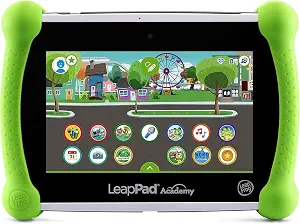
LeapFrog LeapPad Academy Kids’ Learning Tablet, Green
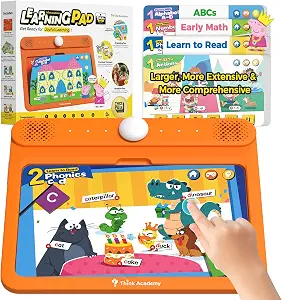
Think Academy Interactive Learning Tablet Pad with Flash Cards for Kids 3-5
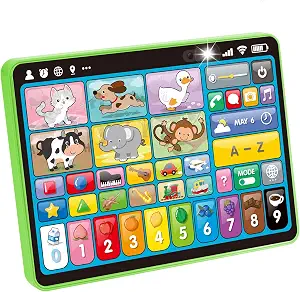
hahaland 5-Language Learning Tablet Toy for Toddler 1-3 with Speech Therapy
Best Early Tablet Buying Guide — Black Friday Deals 2026
When you search for an early tablet, are you looking for a screen-based device, or a hands-on learning activity that happens to be called a tablet? These options answer that question in different ways. One has a shatter-safe screen, Wi-Fi, storage and a learning-app trial; the other two are screen-free, with learning cards or interactive spoken content. The right choice depends on the child’s age, the kind of activity you want to offer and what you expect to be included. For Black Friday, compare the exact product and variant rather than assuming that the category name or a deal label tells you what the package contains. Here is a practical way to narrow the shortlist.
LeapFrog LeapPad Academy Kids’ Learning Tablet, Green
Check Price on Amazon
Best Overall is the editorial pick for households specifically seeking a screen-based learning device for a child within the stated age range of 3-8 years. Its 7" shatter-safe screen, 16 GB of storage and Wi-Fi distinguish it from the screen-free choices here. It also includes a three-month trial of LeapFrog Academy, giving the package a defined learning-app component. Those details make it a useful starting point if your idea of an early tablet includes both a display and digital learning activities. The label is a shortlist recommendation, not a claim that it outperforms every other tablet.
Consider where a screen-based activity fits into your routine before you compare Black Friday offers. The removable silicone bumper with kickstand is an included accessory, and the listed screen is shatter-safe; these are concrete details to weigh for your intended use. A USB Type-C cable is also included. The available facts do not specify battery life, charging time, app compatibility beyond the named trial, or how much content is preloaded, so check the exact listing for details that matter to your setup instead of making assumptions. The Wi-Fi connection is listed, but no further network or account requirements are specified here.
The package notes that hundreds more games, videos, music and eBooks can be found, with that additional content sold separately. That distinction matters when budgeting: the trial and separately sold content are not the same thing, and a sale on the device would not by itself establish the cost of continued access. For Black Friday, inspect the exact offer and variant to confirm that the listing matches this model and includes the items described. Choose this option if the screen, storage, Wi-Fi and included app trial fit your plan; if you want a screen-free format, compare the other two instead.
Key specs
| Age range | Intended for ages 3-8 years |
| Screen | 7" shatter-safe screen |
| Storage | 16 GB |
| Connectivity | Wi-Fi |
| Included accessory | Removable Silicone Bumper With Kickstand |
| Included cable | USB Type-C Cable |
| Learning app trial | Includes a three-month trial of LeapFrog Academy |
| Additional content | Find hundreds more games, videos, music and eBooks (sold separately) |
Think Academy Interactive Learning Tablet Pad with Flash Cards for Kids 3-5
Check Price on Amazon
Best for screen-free learning cards is the editorial label for this option, whose listed materials center on themed card pages rather than a display. It is intended for ages 3 years and up and has an 11'' Large Panel. The supplied learning-card topics are Early Math (20 pages), Learn to Read (20 pages), Sing Along & ABCs (10 pages), and Speak and Spell (20 pages). That subject breakdown helps you judge whether its activities match what you have in mind, without relying on a broad promise of educational value. The label reflects this product’s particular format, not a measured advantage over the others.
Its three named modes—Exploration Mode, Game Mode, and Hints Mode—offer a way to think about how a child might approach the material. If you want an activity organized around specified learning themes, the card list provides a more useful preview than the word “tablet” alone. The facts do not explain how each mode works, how the panel interacts with the cards, or whether additional cards are available, so consult the current listing if those details will affect your decision. The listed age guidance is a starting point; the child’s interest in the subjects and format is also relevant.
Power is a practical Black Friday comparison point here: the product requires 3 AA batteries. The provided details do not say whether batteries are included, so verify that on the exact listing before treating the package as ready to use. Compare the stated card topics and page counts as well as the offer, and make sure you have selected the intended product. This may fit a household seeking a screen-free activity with named early-learning themes; it may be less aligned with someone who specifically wants a display, Wi-Fi or app trial. Those are different format preferences, not a judgment about learning quality.
Key specs
| Screen | Screen Free |
| Panel | 11'' Large Panel |
| Play modes | Exploration Mode, Game Mode, and Hints Mode |
| Included learning cards | Early Math (20 pages), Learn to Read (20 pages), Sing Along & ABCs (10 pages), Speak and Spell (20 pages) |
| Age range | 3 years and up |
| Batteries | 3 AA batteries required. |
hahaland 5-Language Learning Tablet Toy for Toddler 1-3 with Speech Therapy
Check Price on Amazon
Best Budget is the editorial label for the screen-free toddler option, not a statement about its current price or a promise that it will be the least expensive Black Friday choice. Its manufacturer-recommended age range is 12 months – 3 years, and its listed learning content includes 90+ fun modules covering animals, shapes, musical instruments, vehicles, letters, numbers, and colors. With 39 interactive icons that read out words and play sounds, it offers a distinct activity format from both a screen-based tablet and a card-focused learning pad. Those specifics make it easier to compare against the kind of interaction you want.
The described modes include Learning Mode for basic concepts, Quiz Mode for problem-solving skills, Music Mode to spark creativity, and Pretend Play Mode with icons such as a phone and camera. Treat those descriptions as a guide to the intended activities rather than a guarantee of any particular outcome. The product is described as no-screen, and its language options are English, French, Spanish, German, and Italian. Another listed detail says it supports English, Spanish, and French with just one press; because the descriptions differ in scope, check the exact listing and variant to clarify which languages are available in the version you are considering.
For a Black Friday shortlist, age guidance and content range are useful first filters: this option is positioned for younger toddlers, while the other products have different stated age guidance and activity formats. The facts provided do not specify power requirements, included accessories, or whether any extra materials are sold separately, so confirm those points on the exact offer if they matter to your plans. The Best Budget label is a recommendation among these listed products; it does not establish a sale price, discount or market-wide value ranking. Choose it for the stated toddler age range and its combination of spoken icons, modes and language options.
Key specs
| Age range | Manufacturer recommended age 12 months – 3 years |
| Learning content | 90+ fun modules covering animals, shapes, musical instruments, vehicles, letters, numbers, and colors. |
| Languages | Available in English, French, Spanish, German, and Italian |
| Modes | Learning Mode to teach basic concepts, Quiz Mode to build problem-solving skills, Music Mode to spark creativity, and Pretend Play Mode with fun icons like a phone and camera. |
| Screen | This no-screen toddler tablet supports English, Spanish, and French with just one press. |
| Interactive icons | With 39 interactive icons, it reads out words and plays sounds |
Choose the interaction you want to make routine
Start by deciding what an early tablet activity should look like in your home. The LeapFrog option is the only listed product with a screen, Wi-Fi, storage and a named app trial. The Think Academy product is screen-free and describes learning cards across math, reading, ABCs and spelling. The hahaland toy is also no-screen, with interactive icons, spoken words and sounds, plus learning, quiz, music and pretend-play modes. Those distinctions are more useful than treating all three as interchangeable because their names include “tablet.” For Black Friday, first identify which format you would actually choose at the offer you see.
Picture an ordinary moment when the activity might be used: perhaps you want a screen-based device, or perhaps you would rather offer card material or spoken prompts without a screen. That is a household preference, not a claim that one format is universally better. A child’s interest in the listed subjects can also help: the Think Academy cards name specific learning areas, while hahaland’s modules cover a broader stated mix of topics. If the screen-based option is your priority, note that its content beyond the trial may be sold separately. A clear use case helps prevent a striking deal label from distracting you from the activity itself.
Use the age ranges to narrow the choices carefully
The supplied age guidance separates these products in a practical way. LeapFrog is intended for ages 3-8 years; Think Academy is for 3 years and up; hahaland has a manufacturer-recommended age of 12 months – 3 years. These ranges can help you form an initial shortlist, but they do not tell you whether a particular child will enjoy the format or topics. Read the age wording as given and check the current product listing before purchase, especially if the intended user is near a stated boundary. Avoid assuming that a similar-sounding product name means the same age guidance.
Once age is a reasonable fit, consider the activity’s specifics. The younger-toddler option lists interactive icons and modules; Think Academy names card topics and modes; LeapFrog provides a screen, storage, Wi-Fi and an app trial. A child who is drawn to one set of subjects may have a clearer match than a child who is simply described as being within an age band. For Black Friday, make the age range a first filter, then compare the exact activity and package. If you are buying for someone else’s child, confirm the intended age with the recipient rather than relying on an attractive product label.
Match the learning themes to the child’s interests
The content lists let you compare what each product says it covers. Think Academy specifies Early Math, Learn to Read, Sing Along & ABCs, and Speak and Spell, with page counts for each category. hahaland lists modules about animals, shapes, musical instruments, vehicles, letters, numbers and colors, and describes several modes for engaging with that content. LeapFrog includes a three-month LeapFrog Academy trial and identifies further games, videos, music and eBooks as separately sold content. These are different kinds of information, so compare them on their own terms rather than treating a list of topics and an app trial as equivalent.
Ask which themes are likely to matter in the child’s routine. A defined set of card categories may help you select the Think Academy format; several topic areas and modes may be appealing if you are considering the hahaland product; the LeapFrog trial may be relevant if a digital learning app is part of your plan. The facts do not establish how a child will respond or what skills they will gain. During Black Friday, check that the listing describes the material you expect, and remember that the additional LeapFrog content is identified as sold separately. The content details are a planning aid, not a promise of results.
Separate included details from questions the listing must answer
A good comparison distinguishes what the supplied facts confirm from what still needs checking. LeapFrog lists a removable silicone bumper with kickstand and a USB Type-C cable, as well as the three-month app trial. Think Academy lists learning-card pages and says 3 AA batteries are required, but the provided details do not say whether those batteries are in the package. The hahaland facts describe its modes, modules, icons and languages without specifying power requirements or included accessories. Do not fill those gaps by assumption; consult the selected product page for the exact package details.
This matters when a Black Friday offer looks different from another listing for a product with a similar name. Confirm the product identity and variant, then check the contents, power details and any ongoing-content costs relevant to your plans. For LeapFrog, the distinction between the included trial and separately sold additional content deserves attention. For Think Academy, verify battery inclusion if you want to use it immediately. For hahaland, seek the package and power information that is not stated in the facts here. A checklist built from confirmed details and open questions is more dependable than assuming every package has the same extras.
Compare the exact Black Friday listing, then decide
Treat Black Friday as a time to inspect a specific offer, not as proof that a product is discounted or that one option is the best value. Check that the product name, selected variant and described contents match the option you intended to compare. Look at the details that shape your choice: screen-based versus screen-free activity, stated age range, named learning material, listed modes, languages, accessories and power requirements. The product facts here do not provide prices, savings, stock information or promotion terms, so those must be assessed on the live offer rather than inferred from a category heading.
A useful final pass is to ask whether you would still want the product if the deal presentation were removed. If yes, confirm any unanswered package details and compare only offers that match the desired product and variant. If the format is wrong, a Black Friday label does not make it a better fit. Keep the Best Overall, Best Budget and Best for screen-free learning cards labels in perspective: these are editorial choices among the three featured products, not evidence of market-wide superiority or a measured performance ranking. Your decision should follow the child’s age, preferred activity and the exact listing.
Make your Black Friday choice
A practical shortlist can be as simple as three steps: choose screen-based or screen-free, match the stated age guidance and activity to the child, then verify the exact package and offer. LeapFrog suits a search centered on a screen, Wi-Fi and an included learning-app trial; Think Academy centers on screen-free learning cards; hahaland pairs a no-screen format with spoken icons and multiple modes. Before buying during Black Friday, confirm the selected product, included items, required batteries or other setup details, and any separately sold content that could affect your plans. The best choice is the one whose format and listing details match what you actually want.