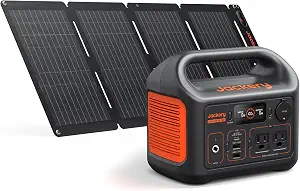
Jackery Solar Generator 300 and 40W Solar Panel
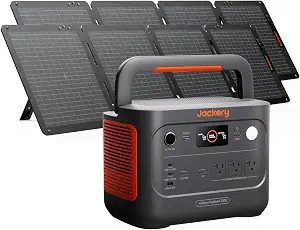
Jackery Solar Generator 1000 v2 and 2x100W Solar Panel,1024Wh LiFePO4
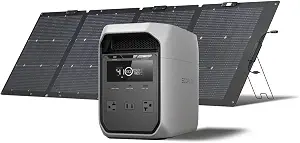
EF ECOFLOW Solar Generator Delta 3 Classic with 220W Solar Panel, 1024Wh
Best Solar Generator Buying Guide — Black Friday Deals 2026
What do you need a solar generator to keep running, and where will you use it? Start with those practical questions before comparing Black Friday listings. These three bundles range from a 292Wh unit with 300W AC output to options with 1024Wh capacity and higher AC output. Their included solar panels also differ, so the headline product name is only the beginning of the comparison. First rule out any configuration that does not fit your equipment; then weigh useful extras such as ports, UPS transfer details and panel specifications. Finally, check that the exact Black Friday listing matches the configuration you meant to choose. The recommendations below are editorial labels among these products, not claims of testing or market-wide superiority.
Jackery Solar Generator 300 and 40W Solar Panel
Best Budget is the supplied editorial label for the Jackery Solar Generator 300 and 40W Solar Panel. Its stated capacity is 292Wh, with 300W AC output and a 600W peak surge. That makes it a sensible candidate to consider for a more limited power plan, such as prioritizing selected electronics rather than assuming one generator will cover every household need. The label does not make a claim about its price or a Black Friday discount; compare the actual offer and decide whether its capacity and output fit what you want to run.
Its connection options are specific and worth mapping against your own devices: 2 AC outlets, a 100W USB-C PD port, 2 USB-A ports, and a 120W car port. Write down which devices you expect to connect and which connection each requires. Then compare that list with the stated ports. This avoids treating a large-looking port count as a guarantee that your particular combination of equipment is suitable.
The product name identifies a 40W solar panel in the bundle, and the listed battery chemistry is LiFePO4. These details give shoppers concrete points to verify when reviewing a Black Friday configuration. Check that the selected offer is for the generator-and-panel package you intended, rather than relying on a thumbnail or a shortened title. The panel specification is part of the package decision, not a reason to assume a particular recharge time or daily energy yield.
The Best Budget designation is an editorial fit label among these three products, not a statement that this is the least expensive offer. Its lower stated capacity and AC output relative to the other listed configurations may align with a narrower set of needs, but the right choice depends on your equipment and intended use. Before checkout, compare the exact listing’s model name, 40W panel, capacity, output and ports. If your plan calls for more stored energy or higher AC output, use those needs to move on to another option.
Key specs
| Capacity and AC output | 292Wh,300W AC |
| Ports | 2 AC outlets, a 100W USB-C PD port, 2 USB-A ports, and a 120W car port. |
| Rated and peak output | 300W rated output (600W peak surge) |
| Battery chemistry | LiFePO4 chemistry |
Jackery Solar Generator 1000 v2 and 2x100W Solar Panel,1024Wh LiFePO4
Check Price on Amazon
Best Overall is the editorial choice here for shoppers who want a 1024Wh system with substantial AC output and included solar panels in one named configuration. The Jackery Solar Generator 1000 v2 and 2x100W Solar Panel has 1024Wh capacity, 1,500W AC output and a 3,000W surge peak. Those figures make it a candidate to investigate when your planned equipment needs more AC output than a small-device-focused setup. They are not a promise that every appliance will work: check each device’s requirements against the generator’s specifications before deciding.
The bundle includes 2 * 100W Solar Panels, which gives the package a clear solar component to compare during Black Friday shopping. Confirm that the listing you are considering names the same generator and the same panel configuration. A product page or offer can present multiple variants, and the event label alone does not establish what is included. If you already have a charging plan, compare its needs with the exact panel contents rather than assuming that another listing with a similar product name is identical.
A 10ms UPS switchover is another stated feature. Consider whether that transfer detail matters for the equipment you intend to connect; do not treat it as a substitute for checking the equipment’s own requirements. The stated weight is 23.37 Lbs, a useful planning detail if you expect to move or position the unit. Think through where it will sit and how often you will handle it, rather than choosing on capacity alone.
This Best Overall label reflects the combination of stated capacity, AC output, UPS switchover and included panels among the listed choices; it does not establish measured superiority. During Black Friday, build your shortlist around the loads you need to support, then verify the exact model, panel count and specifications on the offer itself. If those details fit your plan, this configuration is a broad starting point; if not, a different capacity or output profile may suit your needs better.
Key specs
| Capacity | 1024Wh |
| AC output | 1,500W AC output |
| Surge output | 3,000W surge peak |
| UPS switchover | 10ms UPS switchover |
| Weight | 23.37 Lbs |
| Included solar panels | 2 * 100W Solar Panels |
EF ECOFLOW Solar Generator Delta 3 Classic with 220W Solar Panel, 1024Wh
Check Price on Amazon
Best for Higher AC Output is the editorial label for the EF ECOFLOW Solar Generator Delta 3 Classic with 220W Solar Panel, 1024Wh. Its stated output is 1800W, with a 3600W surge. Those specifications make it worth considering when AC output is a key part of your shortlist. They do not confirm compatibility with any particular appliance, so check the equipment’s own power requirements and compare them with the generator details before relying on it for a planned task.
This model has a LiFePO4 battery and a 100W USB-C Output. Think about whether that USB-C connection is useful for your device mix, while treating AC needs and USB charging as separate questions. A port that suits one item does not settle whether the generator can support another. During Black Friday comparisons, lay out the devices you intend to use and match each one to the relevant stated output or connection instead of choosing by the largest headline figure.
The named bundle includes a 220W bifacial solar panel. The listing states that it can recharge in just 5.8 hours with a 220W solar panel. Treat that as the stated claim for the specified panel arrangement, not a universal expectation for every location or condition. Confirm that the exact offer includes the panel and configuration described, and consider whether the stated recharge information fits your own planning needs.
The unit also automatically switches to battery in under 10ms, according to its stated UPS transfer detail. That may matter if backup transfer is part of your intended setup, but it should not replace checking the connected equipment and its requirements. This Best for Higher AC Output label is grounded in its stated output specification, not in testing or a claim that it is best for every shopper. Verify the exact Black Friday listing, including the 1024Wh capacity and 220W panel bundle, before deciding.
Key specs
| Output | 1800W output (3600W surge) |
| USB-C output | 100W USB-C Output |
| Battery | LiFePO4 Battery |
| UPS transfer | automatically switches to battery in under 10ms |
| Solar recharging | Recharge in just 5.8 hours with a 220W solar panel. |
| Solar panel | 220W bifacial solar panel |
Make your shortlist from real power needs
Begin with the equipment you actually want to run, not with the generator bundle that looks most impressive. Separate AC devices from items you expect to connect through USB or a car port, then note the requirements for each. Compare those needs with the listed output and ports. The Jackery 300, for example, specifies 300W AC output and a set of USB and car connections; the two 1024Wh products state different AC output figures. Those details help define candidates, but they do not determine whether a particular appliance is suitable. Check its own requirements before choosing.
Next, decide which items are essential and which would be convenient. If your plan only involves a limited selection of devices, the Jackery 300’s 292Wh capacity may be a relevant starting point. If you need a different capacity or more AC output, examine the other configurations. Avoid turning capacity into an exact runtime estimate: how long a device can operate is not specified here. On Black Friday, use this staged shortlist to resist being diverted by a prominent event label. The useful question is whether the exact model’s stated capabilities match your plan.
Separate stored energy from output limits
Capacity and output answer different shopping questions. Capacity describes the stated energy reserve, while AC output and surge figures describe separate output specifications. The Jackery 1000 v2 and the EcoFlow Delta 3 Classic each list 1024Wh capacity, but their stated AC output and surge figures differ. The Jackery lists 1,500W AC output and a 3,000W surge peak; the EcoFlow lists 1800W output and a 3600W surge. Compare those figures with your intended equipment rather than treating capacity alone as a complete measure of fit.
Surge information deserves its own check, not a casual glance beside the regular output. Identify whether the equipment you plan to connect has requirements that make the listed surge specification relevant, and confirm the details from its documentation. Do not assume that a higher figure resolves every compatibility question. For Black Friday, keep a simple note of the capacity, output and surge information for each exact configuration. That makes it easier to spot a mismatch between the offer title and the specifications you meant to compare.
Decide which connections and transfer details matter
A useful port list is one that matches your devices, not simply one with many entries. The Jackery 300 lists 2 AC outlets, a 100W USB-C PD port, 2 USB-A ports, and a 120W car port. The EcoFlow lists a 100W USB-C output. For each item on your shortlist, identify its connection and check the relevant specification. Do not infer that an unlisted port is unavailable; use the exact product listing to confirm any connection that matters to you.
UPS transfer details are a different consideration from the everyday port plan. The Jackery 1000 v2 specifies 10ms UPS switchover, while the EcoFlow states that it automatically switches to battery in under 10ms. If you are considering a generator for connected equipment where transfer behavior matters, check the equipment’s requirements and the exact listing carefully. A stated transfer time alone does not establish suitability for a particular setup. During Black Friday, compare this feature only if it has a practical role in your decision.
Treat panels and recharge claims as bundle details
The included panel is part of the configuration you are comparing. The Jackery 300 bundle names a 40W solar panel; the Jackery 1000 v2 bundle includes 2 * 100W Solar Panels; and the EcoFlow bundle names a 220W bifacial solar panel. Verify that the specific Black Friday offer you select matches the panel arrangement you expect. Similar-looking product names or images are not a substitute for checking the selected variant and its stated contents.
Keep panel specifications separate from assumptions about charging results. The EcoFlow listing states: Recharge in just 5.8 hours with a 220W solar panel. Use that as the product’s stated claim for the named panel, not as a guaranteed result in all circumstances or a basis for predicting a different setup. No equivalent recharge duration is provided for the other bundles here. If timing or solar charging is central to your plan, check the exact offer and consider what information the listing actually provides rather than filling gaps with guesses.
Use Black Friday to verify the exact configuration
An event name is not a product specification. Before comparing Black Friday offers, note the full product name, capacity, output and included panel arrangement for the configuration you want. Then confirm that the selected listing shows those same details. This is especially useful when a page presents multiple versions or when a bundle title is shortened. Do not assume an offer includes an accessory just because it appears in a general product image; check the exact variant’s stated contents.
Finish with a short decision sequence: confirm the power needs of your equipment, choose the capacity and output profile that fits, check the connections or transfer information that matter, then verify the panel bundle. Compare the actual offer for that exact configuration without assuming a discount, price advantage or stock status. If a detail you need is unclear, seek confirmation on the listing before buying. This process keeps Black Friday browsing focused on fit rather than turning the event label into a shortcut for a decision.
Make your Black Friday choice
Choose in stages: establish essential equipment fit, consider useful extras, then verify the exact listing. The Jackery 300 offers a 292Wh, 300W AC configuration with specified ports and a 40W panel; the Jackery 1000 v2 combines 1024Wh capacity with 1,500W AC output, UPS switchover and 2 * 100W Solar Panels; the EcoFlow pairs 1024Wh with 1800W output and a 220W bifacial panel. Those differences support distinct shortlist paths, not a universal winner. For Black Friday, check the model, specifications and bundle contents on the selected offer, and choose only when those details match your plan.