 Check Price on Amazon
MSI GeForce RTX 5070 Ti 16G Shadow 3X OC Gaming Graphics Card Buying Guide — Black Friday Deals 2026
Are you choosing a graphics card because its listed specifications suit your planned setup, or because a Black Friday offer makes it look appealing? For the MSI GeForce RTX 5070 Ti 16G Shadow 3X OC, the useful starting points are its memory specification, stated boost clock, PCIe 5 interface, display outputs, three-fan design and minimum power-supply requirement. Those details can help you decide whether the card belongs on your shortlist, but they do not establish how it will perform in a particular game or system. Treat Black Friday as a reason to inspect the exact listing carefully, not as a substitute for checking fit and price against your needs.
The MSI GeForce RTX 5070 Ti 16G Shadow 3X OC is a single-card option to consider if its stated specifications align with the way you plan to build or update a gaming PC. It lists 16GB GDDR7 (28Gbps/256-bit) graphics memory and a Boost clock of 2482 MHz. These are useful points for comparing listings and narrowing a shortlist; they are not a promise of frame rates or a measure of how the card will behave in your specific system. For Black Friday shopping, keep the model name and those specifications together when checking that a deal refers to the version you intend to buy.
Connection and display planning are also part of the decision. The card lists a PCIe 5 interface and DisplayPort and HDMI video outputs, while its maximum display resolution is listed as 4K UHD (3840×2160). Check those details against the connection you plan to use and the displays you intend to connect. The available information does not specify a count of each output, so confirm the exact listing if the number or arrangement of ports matters to your setup. The resolution entry is a specification to consider, not a guarantee of a particular gaming experience at that resolution.
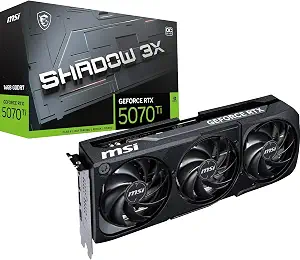
Its name identifies the Shadow 3X OC model, and the listing specifies three fans. That gives you a concrete design detail to weigh, but not a complete basis for predicting noise, temperatures or performance. The listed minimum power supply is a power supply with min. 750 W, an important requirement to check against your planned system before purchase. This guide’s editorial label is Best for a 16GB GDDR7 shortlist: it highlights the stated memory configuration as a useful comparison point, not as a claim of measured superiority. During Black Friday, verify the exact model and variant before comparing the offer with your budget.
Start with the system requirements that can rule it in or out
Begin with the parts of the decision that need to work together. The card lists a PCIe 5 interface, so check the connection you intend to use against your planned system rather than assuming that a product name alone settles compatibility. The supplied specifications do not detail motherboard compatibility, case clearance or other installation requirements; consult the exact listing and your system documentation for those questions.
Power deserves an early check as well: the listed minimum is a power supply with min. 750 W. Compare that requirement with the power supply in your build before spending time weighing other features. Do not treat an attractive Black Friday offer as a reason to skip this step. If you are planning a new system, keep the stated minimum in view while selecting components; if you are upgrading, verify your existing setup rather than assuming it meets the requirement.
Use memory and clock details to organize your shortlist
The listing gives two different details worth keeping distinct: 16GB GDDR7 (28Gbps/256-bit) graphics memory and a Boost clock of 2482 MHz. The memory entry describes the listed graphics-memory configuration, while the clock is a stated clock specification. Neither number by itself tells you how a game will run or whether this card is the right value for your own priorities. Use them to compare exact product versions, not to infer results that are not provided.
This distinction is especially useful during Black Friday, when similarly named listings can be easy to confuse. Check that the full model name and the specifications shown on the offer match the MSI GeForce RTX 5070 Ti 16G Shadow 3X OC you are considering. If you are comparing alternatives, use the same kinds of details across the listings and decide which matter most to you, rather than treating a single figure as a complete verdict.
Plan around your actual displays and connections
The stated video outputs are DisplayPort and HDMI, and the listed maximum display resolution is 4K UHD (3840×2160). First identify the connection your display setup calls for, then check the precise listing for the output details you need. The provided facts do not give an output count, so do not assume a particular arrangement from the names of the connectors alone.
Think of the resolution specification as one planning detail, not as a promise about image quality or gaming performance. Your intended use and display setup should guide whether it is relevant to your purchase. For a Black Friday comparison, confirm that the listing is for this exact card and that its displayed connection information fits your plans before deciding that an offer is suitable.
Treat the three-fan design as one part of the choice
Three fans are listed for this model. That is a specific design feature you can use when comparing cards, but the supplied information does not establish noise levels, cooling results or performance under load. Consider it alongside the other confirmed details—memory, clock, interface, outputs and power requirement—instead of letting one feature decide the purchase for you.
If Black Friday pricing brings this card onto your shortlist, make a note of the exact model name and fan detail as you review the offer. Then check any remaining system-fit questions against the full listing and your own build information. This approach keeps the comparison grounded in what is actually specified and avoids turning a design detail into an unsupported claim about everyday experience.
Verify the exact offer before making a Black Friday decision
Compare the offer for the precise MSI GeForce RTX 5070 Ti 16G Shadow 3X OC listing, not just for a broad RTX 5070 Ti label. Confirm that the product name and listed specifications correspond to the model you meant to evaluate. Check the current price shown to you against your own budget and other options; no particular discount or sale price is established here.
A quick final review should cover your planned PCIe 5 connection, the minimum power-supply requirement, the DisplayPort and HDMI outputs, and the listed maximum display resolution. Revisit the memory and Boost clock details if they are central to your shortlist. These checks make Black Friday comparison more deliberate without assuming that a promotion is active or that a lower price automatically makes the card the right fit.
Key specs
| Graphics memory | 16GB GDDR7 (28Gbps/256-bit) |
| GPU clock | Boost: 2482 MHz |
| Interface | PCIe 5 |
| Video outputs | DisplayPort, HDMI |
| Number of fans | 3 |
| Maximum display resolution | 4K UHD (3840×2160) |
| Minimum power supply | A power supply with min. 750 W |
Make your Black Friday choice
The MSI GeForce RTX 5070 Ti 16G Shadow 3X OC is worth considering when its listed memory, clock, PCIe 5 interface, outputs and three-fan design match the criteria you have set, and when your system can meet its stated minimum power requirement. Before buying during Black Friday, use an exact-listing checklist: verify the model and variant, compare the price currently shown, confirm the connection and power details against your build, and check the display information against your setup. Make the decision on those specifics—not on an assumed promotion or performance claim.