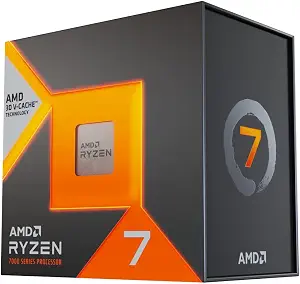
 Check Price on Amazon
AMD Ryzen 7 7800X3D 8-Core, 16-Thread Desktop Processor Buying Guide — Black Friday Deals 2026
A Black Friday shortlist for the AMD Ryzen 7 7800X3D should begin with the parts of the listing that determine whether it belongs in your build, then move to details that matter to your plans, and finish with a careful check of the exact offer. The provided specifications identify an AM5 socket, eight cores, 16 threads, a listed processor speed of 4.2 GHz, and cache information. Those facts help frame a decision, but they do not answer every build question or establish whether a particular Black Friday offer is worthwhile. Use the model and listing details together, and verify anything important to your setup that is not specified here.
The AMD Ryzen 7 7800X3D is listed as an 8-core, 16-thread desktop processor with an AM5 socket. That makes the socket the practical first filter: check whether it matches the motherboard you intend to use rather than relying on a broad platform assumption. The listing gives a processor speed of 4.2 GHz, along with 8 MB L2 plus 96 MB L3 cache memory. Treat these as specification details for comparing this exact model with your needs, not as guarantees about performance in a particular application.
For this guide, it earns the editorial label Best for shoppers prioritizing the listed cache configuration. That label reflects the prominent cache figures in the supplied facts; it is not a claim of measured superiority or a promise that cache will matter equally in every workload. The processor also lists eight cores and 16 concurrent threads, so shoppers can weigh those counts against the kinds of programs and tasks they actually plan to use. Black Friday can bring more listings and offers to compare, but the model name and exact product details should remain central to the decision.
Start your shortlist with the socket
Before weighing extras or a Black Friday headline, compare the listed Socket AM5 requirement with the motherboard planned for your build. The provided record identifies the processor socket, but it does not establish compatibility with a specific motherboard, firmware version, or complete system. Check the exact board and processor information relevant to your setup before purchasing. If you already have a motherboard, use its precise model details as a checkpoint; if you are choosing parts together, make the socket match part of that selection process rather than an afterthought.
This first step helps avoid spending time comparing offers that may not suit your intended configuration. Once the socket question is settled, verify the remaining requirements that matter to your build using reliable information for those exact parts. Do not assume that an attractive Black Friday price resolves platform fit, or that a broad AM5 reference answers every compatibility question. The listing establishes the processor’s socket, and your system-specific checks establish whether the planned combination is appropriate.
Relate the core and thread counts to your routine
The specification lists eight processor cores and 16 concurrent threads. Use those figures to describe what you are considering, then think through the actual programs and tasks that make up your routine. If your decision involves several kinds of work, write down which ones matter most and consult information relevant to those applications. The counts are useful facts for comparing processor listings, but by themselves they do not establish how quickly a particular task will run or whether the processor is the right choice for you.
This distinction is useful during Black Friday browsing, when a short product title can make unlike listings seem easy to compare. Keep the model identity and the stated counts together, and avoid treating a thread count as a substitute for checking workload-specific requirements. If you are choosing between this processor and another option, compare the same kinds of details for each exact model, then decide whether the differences matter to your plans. A clear use case is more helpful than choosing based on a number without context.
Read speed and cache as separate details
The listing gives a processor speed of 4.2 GHz and describes cache as 8 MB L2 plus 96 MB L3. Keep those entries distinct when making a shortlist: one is the stated processor speed, while the other describes the listed cache configuration. The supplied facts do not explain application-level results, so use these figures to identify and compare the product rather than predict a specific outcome. If a particular program is important to you, seek information that addresses that program and the exact processor model.
A Black Friday comparison is more useful when it checks the full model and its stated details instead of relying on a simplified headline. Confirm that the listing you are considering is for the Ryzen 7 7800X3D and compare its specification wording with the product you meant to evaluate. Do not assume another listing with a similar name has identical details. Keep your priorities visible: if the cache configuration is a reason you are considering this model, make that an explicit criterion rather than treating it as an automatic benefit for every use.
Treat graphics and temperature entries carefully
The provided specification lists graphics frequency as 2200 MHZ. and maximum operating temperature (Tjmax) as 89°C. These are specific listing details, not enough information to determine whether the graphics entry meets a particular display or system need, or how a completed computer will behave thermally. If either point affects your purchase, check the requirements of your intended setup and consult details for the exact processor and other components. Avoid inferring a use case or cooling outcome from these entries alone.
This is also a sensible moment to separate what the listing states from what you still need to verify. The temperature figure is a maximum operating temperature entry; it is not a description of typical operating conditions in your system. The graphics-frequency figure is not a complete explanation of graphics capabilities. During Black Friday, keep these qualifications in view when comparing product pages, and do not let a single specification stand in for an answer to a system-specific question.
Check the exact Black Friday listing before deciding
Black Friday is a reason to compare carefully, not evidence that an offer is active or that a particular price is favorable. Check the exact product name, model identity, and specifications on the listing you intend to buy. Compare the offer details actually presented at checkout with your own budget and with the alternatives you are considering. No price, discount, stock status, or seller policy is established by the specifications in this guide, so base the final decision on the current offer in front of you.
Also make a short list of unanswered questions that matter to your build, such as whether the exact processor works with your planned parts and whether other components meet your requirements. Verify those points independently before ordering. Keep a record of the variant and offer you evaluated so a last-minute change does not lead you to a different product unintentionally. A disciplined Black Friday comparison weighs the exact item and the overall fit, not just the promotional wording.
Key specs
| Socket | Processor Socket Socket AM5 |
| Processor speed | Processor Speed 4.2 GHz |
| Core count | Processor Core Count 8 |
| Concurrent threads | Processor Number of Concurrent Threads 16 |
| Graphics frequency | Graphics Frequency : 2200 MHZ. |
| Maximum operating temperature | Maximum Operating Temperature (Tjmax) : 89°C. |
| Cache | 8 MB L2 plus 96 MB L3 cache memory |
| Process technology | 5 nm process technology |
Make your Black Friday choice
For the Ryzen 7 7800X3D, the most practical sequence is straightforward: confirm the Socket AM5 fit, relate the eight-core and 16-thread listing to your intended tasks, then decide how much the stated speed and cache configuration matter to your shortlist. Treat the graphics-frequency and temperature entries as limited specification details, and verify any system-specific questions elsewhere. Before a Black Friday purchase, review the exact model and offer rather than assuming a headline tells the whole story. That process keeps the decision grounded in what is listed and what your build actually needs.