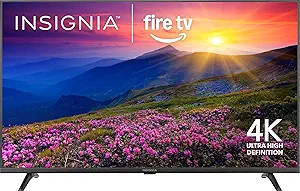
INSIGNIA 50" Class F50 Series LED 4K UHD Smart Fire TV with Alexa Voice Remote (NS-50F502NA26)
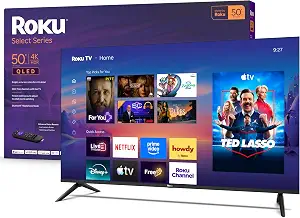
Roku 50-Inch Select Series Smart TV 2026-4K (2160p) QLED TV
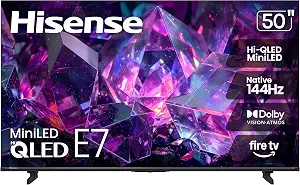
Hisense 50" E7 Cinema Series Hi-QLED Mini-LED 4K UHD Smart Fire TV (50E7SF)
Best 50 Tv Buying Guide — Black Friday Deals 2026
Which details will make a 50-inch TV fit your room and routine: the smart platform, the connections, or a particular picture specification? This shortlist covers three 4K models with different strengths, from a straightforward Fire TV option to a Roku QLED and a Mini-LED set listed with a 144 hertz refresh rate. For Black Friday, begin by deciding what you actually need; a promotion is useful only if the exact model suits that plan. The sections below move from essential fit to useful extras, then to checking the listing before you choose.
INSIGNIA 50" Class F50 Series LED 4K UHD Smart Fire TV with Alexa Voice Remote (NS-50F502NA26)
Check Price on Amazon
Best Budget is the editorial label for the INSIGNIA 50-inch Class F50 Series LED 4K UHD Smart Fire TV with Alexa Voice Remote (NS-50F502NA26). It offers a direct combination of 4K resolution, a 60 hertz refresh rate, and FireOS in a 50-inch television. This is a useful starting point if you want a smart TV with familiar core specifications and do not need to make a higher refresh rate the deciding feature. The label is a way to organize this particular shortlist, not a statement about its current price or a claim that it is the least expensive option on the market.
FireOS is the listed operating system, and the product name specifies an Alexa Voice Remote. Those details may matter if you prefer a Fire TV interface or want to compare the named remote with the controls offered on other listings. Bluetooth and Wi-Fi are listed wireless technologies. The available facts do not specify particular apps or the functions supported by the remote, so check the product page if a particular service or control feature is central to your choice. Around Black Friday, resist choosing from a headline alone: confirm that the listing is for model NS-50F502NA26.
This Insignia has 3 HDMI ports, a detail worth matching against the equipment you plan to plug in. If that count fits your setup, the rest of the listed specifications offer a clear basis for comparison: 4K resolution, 60 hertz refresh rate, HDR10 support, and FireOS. HDR10 is the stated HDR format; it should not be treated as a promise about brightness or picture quality beyond that specification. This set is a sensible candidate when those features meet your needs and the exact Black Friday offer is compelling to you. Compare the model and included configuration on the product page, then decide whether its platform and inputs suit your household.
Key specs
| Resolution | Resolution 4K |
| Refresh rate | Refresh Rate 60 hertz |
| HDR format | HDR Format Supported HDR10 |
| Operating system | Operating System FireOS |
| HDMI ports | Total Number of HDMI Ports 3 |
| Screen size | Screen Size 50 inches |
| Wireless technology | Wireless Technology Bluetooth, Wi-Fi |
Roku 50-Inch Select Series Smart TV 2026-4K (2160p) QLED TV
Check Price on Amazon
Best Overall is the editorial pick for shoppers who want a well-rounded set of listed features rather than a single specialized priority. The Roku 50-Inch Select Series Smart TV 2026-4K (2160p) QLED TV combines 4K resolution with a 60 hertz refresh rate, and its product name identifies it as a QLED TV. Those details make it a candidate for everyday viewing if you have already decided that a 50-inch screen and 4K resolution fit your space and expectations. The label reflects this shortlist’s feature mix; it is not a claim of measured superiority or a market-wide award.
Roku OS gives this model a distinct platform choice among the three televisions here. If you are comparing Black Friday options, consider whether Roku OS is the interface you would prefer to navigate, rather than assuming that all smart TV systems work alike. The listed wireless technologies are Bluetooth and Wi-Fi, which are useful details to check against your home setup and the devices you intend to use. The specifications do not describe every app, control method, or network requirement, so confirm anything essential on the exact product page.
Connections are a practical reason to keep this Roku model on your shortlist: it has 4 HDMI ports. Count the equipment you expect to connect, such as a console or a separate media device, and compare that list with the inputs on every television you are considering. The set also lists a VESA mount standard of 200 x 100 mm; check that exact measurement against a wall mount before buying rather than relying on appearance or screen size alone. For Black Friday, verify that the listing is for this Select Series model and the same configuration. Choose it if the Roku platform, 4K resolution, and connection count align with your priorities.
Key specs
| Resolution | Resolution 4K |
| Refresh rate | Refresh Rate 60 hertz |
| Screen size | Screen Size 50 inches |
| HDMI ports | Total Number of HDMI Ports 4 |
| Operating system | Operating System Roku OS |
| Wireless connectivity | Wireless Technology Bluetooth, Wi-Fi |
| VESA mount | VESA Mount Standard 200 x 100 mm |
Hisense 50" E7 Cinema Series Hi-QLED Mini-LED 4K UHD Smart Fire TV (50E7SF)
Check Price on Amazon
Best for 144 hertz refresh-rate shoppers is the editorial label for the Hisense 50-inch E7 Cinema Series Hi-QLED Mini-LED 4K UHD Smart Fire TV (50E7SF). Its listed 144 hertz refresh rate is the standout specification for shoppers who have made refresh rate a key part of their shortlist. It also has 4K resolution and Mini-LED backlight technology. Treat those as separate details: the refresh-rate figure describes one specification, while Mini-LED identifies the listed backlight technology. Neither alone establishes how the television will look in your room or with particular content.
The Hisense uses FireOS, giving it a platform in common with the Insignia while separating it from the Roku OS model. A shared operating system does not mean the two televisions have identical features; compare each full model listing for the distinctions that matter to you. This Hisense has 4 HDMI ports, which may suit a setup where connection count is a priority. Bluetooth and Wi-Fi are not included in the provided facts for this model, so avoid assuming its wireless details from another television’s listing. For a Black Friday purchase, check the complete specification panel for the exact 50E7SF variant.
Other listed details include a speaker maximum output power of 20 watts and AirPlay screen mirroring. Consider the audio figure as a specification to compare, not a guarantee of how loud or clear sound will seem in your room. Screen mirroring is specifically identified as AirPlay; if you plan to use that feature, verify that your intended devices and setup meet the requirements on the listing. This is the right candidate to investigate if a 144 hertz refresh rate and Mini-LED backlight are central to your decision. Its Black Friday price, if shown, should be weighed only after confirming the model and those exact features.
Key specs
| Screen size | Screen Size 50 inches |
| Resolution | Resolution 4K |
| Refresh rate | Refresh Rate 144 hertz |
| Backlight | Display Backlight Technology Mini-LED |
| HDMI ports | Total Number of HDMI Ports 4 |
| Operating system | Operating System FireOS |
| Audio output | Speaker Maximum Output Power 20 watts |
| Screen mirroring | Screen Mirroring Technology AirPlay |
Set the room and screen expectations first
Start with the practical question of where the television will go and what you normally watch there. Each model in this guide is listed with a screen size of 50 inches, so the screen-size specification alone will not distinguish them. Check the space where the set will sit, the viewing position, and whether you want it on furniture or on a wall. The Roku model lists a VESA mount standard of 200 x 100 mm; confirm that exact measurement against a mount you are considering. The other provided records do not give a VESA measurement, so consult their exact listings if wall mounting matters.
Next, decide what counts as essential for your routine. If you mainly want a 4K smart TV, all three products list 4K resolution, leaving platform, refresh rate, connections, and other stated details to narrow the field. If the television will serve several people, talk through which interfaces and devices everyone expects to use. A Black Friday banner can make a screen look like an easy decision, but the best fit still depends on placement and everyday use. Write down your must-haves before looking at an offer, then remove any candidate that fails one of those requirements.
Prioritize the picture specifications you notice
Use the specifications to identify differences, not to assume a complete picture-quality ranking. All three televisions list 4K resolution. The Insignia and Roku each list a 60 hertz refresh rate, while the Hisense lists 144 hertz. That makes the Hisense the clear option to investigate if the refresh-rate figure is a priority for you, but the specification alone cannot predict the result with every program, game, or viewing condition. Match the figure to your intended use and check for any additional details you need on the exact listing.
The backlight and HDR information also differ in what they tell you. The Hisense lists Mini-LED backlight technology; the Insignia lists HDR10 support. These are different kinds of specification and should not be treated as interchangeable measures. The provided Roku details identify its screen as QLED in the product name, but do not provide an HDR format or backlight specification. During Black Friday comparisons, avoid filling those gaps with assumptions. Focus on what is actually listed, and look up any missing item that matters to your decision before treating one offer as a match.
Choose the smart system you want to live with
The operating system is an everyday-use distinction, so consider it alongside the hardware rather than as an afterthought. The Insignia and Hisense list FireOS; the Roku model lists Roku OS. If you already have a preference, that may simplify your shortlist. If not, think about which interface you would be comfortable navigating and compare the exact listing for the services and controls you expect. The supplied specifications do not identify a full app catalogue for any of these sets, so do not assume that a platform name guarantees a particular service or feature.
The Insignia product name includes an Alexa Voice Remote, while the provided Roku facts list Bluetooth and Wi-Fi as wireless technologies. The Hisense record identifies AirPlay as its screen-mirroring technology. These details may be useful if a named control or mirroring feature fits your routine, but check how it works with your intended devices before buying. Black Friday can encourage fast comparisons based on model names; take a moment to verify the operating system and any feature you specifically want. Choose by the functions documented for the exact model, not by expectations carried over from another television.
Match HDMI inputs to the devices you own
Make an inventory of the equipment you would connect before comparing port counts. The Insignia lists 3 HDMI ports; the Roku and Hisense each list 4. Count the devices that need HDMI connections in your intended setup, then decide whether you need room for another device later. This is a straightforward way to turn a specification into a household decision instead of treating a larger count as automatically better. The provided facts do not describe every port capability, so check the full product page if a specific connection function is required.
Wireless details can also help you assess setup fit, but the records are not identical. Bluetooth and Wi-Fi are listed for the Insignia and Roku; the Hisense facts supplied here do not state wireless technology. That omission is not proof that a feature is unavailable. Verify the exact listing if wireless connectivity is essential. The Roku’s VESA measurement may be relevant to placement, while any mounting decision for the other sets requires checking their own listings. In a Black Friday comparison, keep a short checklist of inputs, wireless needs, and placement requirements so a low headline price does not distract from an unsuitable setup.
Use Black Friday to confirm the exact configuration
Once you have a shortlist, compare the complete offer with the model you meant to buy. Check the brand, series, full model name or number, screen size, and listed specifications on the product page. This matters here because a search result or promotional tile may show only part of a name. For example, the Insignia model number is NS-50F502NA26 and the Hisense model number is 50E7SF. Confirming these identifiers helps keep your comparison tied to the intended television rather than a nearby variant.
Then assess the displayed offer on its own terms. No price or promotion is established by this guide, so do not assume a Black Friday discount is active or that an advertised deal is better than another option. Compare the exact listing and configuration you are considering, and make sure the features that led you to that model are present there. If an important item is unclear, pause and verify it before purchasing. A clear shortlist, exact-model check, and feature-by-feature comparison are more dependable decision steps than reacting to a banner or urgency language.
Make your Black Friday choice
A practical shortlist starts with fit: confirm that a television listed at 50 inches suits the room, then decide which platform, refresh rate, backlight detail, and connections matter. The Roku is the broad-feature editorial pick, the Insignia is the budget-oriented choice for this group, and the Hisense is the option for shoppers focused on 144 hertz. Before acting on a Black Friday offer, check the exact model, configuration, and specifications against your notes. Buy only when the listing matches the screen and features you intended to choose.