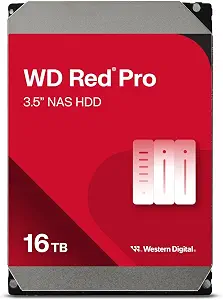
Western Digital 16TB WD Red Pro NAS Internal Hard Drive HDD – 7200 RPM, SATA 6 Gb/s, CMR, 512 MB Cache, 3.5" – WD161KFGX
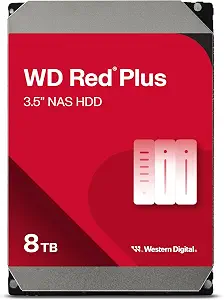
Western Digital 8TB WD Red Plus NAS Internal Hard Drive HDD
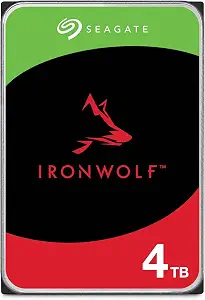
Seagate IronWolf 4TB NAS Internal Hard Drive CMR 3.5 Inch SATA 6Gb/s 5400 RPM 64MB Cache for RAID Network Attached Storage Rescue Services (ST4000VNZ06/006)
Best Nas Drive Buying Guide — Black Friday Deals 2026
A NAS drive choice starts with two practical questions: how much storage your files call for, and which drives your NAS documentation says it can use. The three options here span 4TB, 8TB and 16TB, with different rotational speeds, cache sizes and workload specifications. Those details help build a shortlist, but they do not replace a fit check for your particular system. During Black Friday, treat each product page as a specific variant to verify rather than assuming a sale banner identifies the drive you intend to buy. First settle capacity and fit; then compare the features that matter for your storage routine.
Western Digital 16TB WD Red Pro NAS Internal Hard Drive HDD – 7200 RPM, SATA 6 Gb/s, CMR, 512 MB Cache, 3.5" – WD161KFGX
Check Price on Amazon
Best Overall is the editorial choice here for shoppers who want the listed 16TB capacity and a substantial set of specified drive details to consider together. This WD Red Pro is a 3.5-inch internal hard drive with a SATA 6 Gb/s interface, CMR recording, a 7200 rpm rotational speed and 512 MB of cache. That combination makes it a clear candidate to investigate when you have a NAS storage plan that calls for this capacity and your system documentation confirms the drive is suitable. The label is a shortlist cue among these products, not a claim of measured superiority or a guarantee that it suits every NAS.
The workload figure is another point to weigh against your own expected use: the listing says the drive is rated for a 550TB/yr workload rate(2). Keep that qualification attached to the figure, and do not treat it as a promise about a particular household or business workload. For a library of files that you expect to keep in a NAS, capacity may be the first filter; for a busier storage routine, the workload specification may be a useful question to research alongside fit. Neither detail tells you how much usable space a particular storage arrangement will provide, so plan around the NAS setup you actually intend to use.
For Black Friday, verify that the offer page names WD161KFGX and matches the 16TB WD Red Pro variant before comparing its terms with other listings. Check the listed interface, form factor and your NAS documentation, rather than relying on the Red name alone. Then decide whether the 7200 rpm speed, 512 MB cache, CMR recording and workload specification are relevant to your priorities. These are distinct details, not a complete prediction of how the drive will behave in your own system. The option is most straightforward to shortlist when you specifically need its stated capacity and have confirmed that the drive fits your NAS plan.
Key specs
| Storage capacity | 16 TB |
| Rotational speed | 7200 rpm |
| Hard disk interface | Serial ATA-600 |
| Recording technology | CMR |
| Cache | 512 MB |
| Form factor | 3.5 inches |
| Rated workload | Rated for 550TB/yr workload rate(2) |
Western Digital 8TB WD Red Plus NAS Internal Hard Drive HDD
Check Price on Amazon
Best for an 8TB capacity option is a deliberately specific label: the WD Red Plus listing provides 8000 GB of storage, CMR recording and a 3.5-inch form factor. It also lists a Serial ATA-600 interface, a rotational speed of 5640 rpm and 256 MB of cache. These particulars give you a practical basis for checking it against the space you want to plan for and the drive details required by your NAS. The label does not suggest that this is the right capacity for everyone; it identifies the option in this group for shoppers whose shortlist calls for the stated 8TB capacity.
The listing also specifies support for up to 180 TB/yr workload rate and describes NASware firmware for compatibility. Keep both statements in their original scope as you compare candidates. The workload figure is not an estimate of your own data activity, while the firmware description should not replace checking the exact NAS model and drive requirements. If your storage plans involve a personal collection, shared files or another defined purpose, write down the capacity you want and the system you will install the drive in. Then see whether these listed specifications line up with the documentation and your expectations.
A Black Friday comparison should confirm that the offer is for this WD Red Plus variant, not just a product page or headline that mentions WD Red. Review the exact capacity and the stated 3.5-inch form factor and Serial ATA-600 interface, and resolve fit questions using your NAS documentation. You can then weigh CMR, rotational speed, cache and the qualified workload rate separately instead of treating one specification as a verdict on the whole drive. This model is a considered middle point in the provided capacity selection only if 8TB fits your own plan; no listing label can determine that for you. Compare the complete offer after the model and the intended NAS use are clear.
Key specs
| Storage capacity | 8000 GB |
| Interface | Serial ATA-600 |
| Rotational speed | 5640 rpm |
| Recording technology | CMR |
| Cache | 256 MB Cache |
| Form factor | 3.5 inches |
| Workload rate | Supports up to 180 TB/yr workload rate |
| Firmware | NASware firmware for compatibility |
Seagate IronWolf 4TB NAS Internal Hard Drive CMR 3.5 Inch SATA 6Gb/s 5400 RPM 64MB Cache for RAID Network Attached Storage Rescue Services (ST4000VNZ06/006)
Check Price on Amazon
Best Budget is the editorial label for the Seagate IronWolf 4TB NAS drive in this selection. It identifies a budget-oriented shortlist role among the products provided; it does not assert a price, a discount or a market-wide award. The listing gives a 4TB capacity, a 3.5 Inch form factor, a SATA 6Gb/s interface and CMR recording. It also specifies 5400 RPM and 64MB Cache. If your storage plan calls for the listed capacity, those details make this a concrete option to check against your NAS documentation before considering any Black Friday offer.
The product description states compatibility with up to 8-bay, multi-user NAS environments. That is useful context when your planned storage system falls within the description, but it should not be taken as confirmation for every NAS model or configuration. Look up your own system’s drive requirements and confirm the actual listing variant. Capacity is also a planning decision: think about the files you intend to keep and the space your chosen storage arrangement calls for, rather than assuming a drive’s stated capacity will settle every question about usable space. The interface and form factor are fit details; CMR, speed and cache are separate specifications to consider.
On Black Friday, compare the offer for ST4000VNZ06/006 by its exact model and details, not by an IronWolf family name alone. The listing includes Rescue Services in the product name, but the provided facts do not set out the terms, so check the actual offer for what is included rather than assuming coverage or policy details. Confirm the capacity, connection and format against your NAS documentation, then decide whether the stated multi-user and up to 8-bay context matches your intended use. The 4TB option may suit a defined, more limited storage plan; the right choice depends on your files, system and offer, not the Best Budget label by itself.
Key specs
| Capacity | 4TB |
| Recording type | CMR |
| Form factor | 3.5 Inch |
| Interface | SATA 6Gb/s |
| Rotational speed | 5400 RPM |
| Cache | 64MB Cache |
| NAS compatibility | up to 8-bay, multi-user NAS environments |
Set the capacity target before browsing
Start your shortlist with the data you expect to keep, not with the most prominent capacity in a Black Friday banner. The options here state 4TB, 8000 GB and 16 TB. Decide which one is a plausible match for your planned files and the way you expect to use the NAS. A personal archive, shared household folders and a work collection can have different storage needs; the point is to describe your own use before comparing product pages. If you are unsure, write down what belongs in the system and what you may add later, then use that plan to decide which capacity to investigate.
A drive’s capacity specification is not a complete calculation of the space you will have in a NAS. Your intended storage arrangement and system settings matter, so consult the NAS documentation and plan for the setup you will actually use. Avoid assuming that buying the biggest listed drive is automatically the best decision, or that a smaller capacity is enough just because it is cheaper on a particular day. During Black Friday, keep capacity comparisons attached to the exact product variant. A price or promotion, if shown, cannot tell you whether the stated capacity matches your needs.
Once you have a capacity target, move to fit and then to secondary specifications. This order keeps an appealing cache figure or workload description from distracting you from a basic mismatch with your plan. If the 4TB, 8TB or 16TB option is under consideration, make a note of the exact model and revisit it when checking the NAS requirements and the complete offer.
Use your NAS manual to narrow the field
Treat system fit as an essential filter, not an assumption based on a drive family name. Each option here is described as an internal 3.5-inch hard drive, and each listing provides a SATA interface specification. The WD Red Pro and WD Red Plus list Serial ATA-600; the Seagate listing gives SATA 6Gb/s. Those details are useful for a side-by-side check, but they do not establish compatibility with every NAS. Find the requirements for your exact NAS model and intended storage arrangement, and compare them with the full drive listing before deciding.
Also check how many drives your planned system is meant to accommodate and whether its documentation gives any particular drive requirements. The Seagate description specifically says it is compatible with up to 8-bay, multi-user NAS environments. That statement can help frame a question about the system you have in mind; it is not a substitute for confirming the particular NAS model and configuration. The WD Red Plus listing describes NASware firmware for compatibility, but that wording alone does not settle fit either. Confirm the details rather than extending a product description beyond what it says.
This careful approach matters during Black Friday, when similar product names can make it easy to compare unlike variants. Open the exact listing, check the model identifier and compare its capacity, form factor and interface with your NAS documentation. If the page does not make the variant clear, resolve that uncertainty before relying on the offer. A correctly matched drive is a more useful shortlist candidate than a tempting listing whose fit you have not verified.
Keep recording, rotation and cache distinct
The product specifications include several details that are easy to collapse into a vague idea of performance. Keep them in separate columns when you compare drives. All three listings specify CMR recording. The WD Red Pro states 7200 rpm and 512 MB cache; the WD Red Plus states 5640 rpm and 256 MB cache; the Seagate IronWolf states 5400 RPM and 64MB Cache. These are the supplied specifications, not a controlled comparison of how the drives will perform in a particular NAS.
Use those details to identify what you want to learn, not to predict an outcome the listings do not establish. A higher stated rotational speed or a larger cache figure does not by itself tell you how a complete NAS will feel for your files, network, software or storage arrangement. Likewise, CMR is one specification among several; do not treat the recording method as a substitute for capacity, fit or workload planning. If one of these features matters to your setup, research it in the context of your NAS and intended use.
For a Black Friday shortlist, note the specification next to the exact variant so that you do not accidentally transfer a detail from one drive to another. Once fit and capacity are settled, compare recording type, rotational speed and cache as separate pieces of information. That disciplined reading avoids overvaluing a single number and keeps the decision tied to your actual priorities.
Put workload figures in your own context
Workload information can help you ask a more focused question about intended use, but it is not a direct description of every user’s activity. The WD Red Pro listing says it is rated for a 550TB/yr workload rate(2). The WD Red Plus listing says it supports up to 180 TB/yr workload rate. Preserve the wording and qualifications when comparing these figures; do not turn them into a guarantee about lifespan, a prediction of your data traffic or a ranking of complete drives.
Think about the role you expect the NAS to serve and whether you have a reason to investigate workload specifications more closely. A home file collection and a system handling shared activity may call for different questions, but the supplied figures alone cannot decide which model is suitable. Check the NAS documentation and the drive’s full product information for context relevant to your setup. If you cannot connect a number to a real requirement, keep it as background information rather than making it the deciding feature.
During Black Friday, avoid letting a large-sounding figure dominate the offer comparison. First confirm the model, capacity and fit; then review the workload wording alongside other relevant specifications. The Seagate facts provided here do not include a workload-rate figure, which is simply a limit on what can be compared from these records—not evidence that any particular feature is missing. Base your questions on the complete listing and the documentation for your system.
Compare the complete Black Friday listing
After choosing a capacity range and checking fit, inspect the full offer for the exact drive variant. Confirm the product name and model where one is supplied: WD161KFGX for the 16TB WD Red Pro, and ST4000VNZ06/006 for the Seagate IronWolf. For the WD Red Plus, ensure the page identifies the 8TB WD Red Plus option. Match the stated capacity, form factor and interface to the item you intend to buy; a broad family name or a headline is not enough to establish that two listings are the same variant.
Black Friday pages can put promotional language ahead of the details you need to evaluate. Do not assume an active promotion, a particular saving or availability from the season or article title. If an offer is shown, compare the exact item and its stated terms with other listings for that same variant. For the Seagate product, Rescue Services appears in the product name, but the facts here do not specify what its terms include. Check the live offer for details instead of inferring a duration, process or policy.
Make the final comparison in a consistent order: NAS fit, capacity, then the specifications that matter to your use, followed by the complete offer details. If any one of those remains unclear, pause and verify it rather than allowing urgency or a sale banner to make the decision. A careful variant check makes Black Friday browsing more useful, even when the result is to wait for clearer information or select a different capacity.
Make your Black Friday choice
A sound NAS drive shortlist is built in stages: define the storage job, verify the exact system fit, then weigh capacity and the specifications relevant to your routine. The 16TB WD Red Pro, 8TB WD Red Plus and 4TB Seagate IronWolf give you distinct listed capacities and feature sets to compare, not a universal winner for every NAS. During Black Friday, make the model and variant your reference point, inspect the complete offer and confirm anything uncertain in the system documentation or live listing. Choose the drive that fits your plan, rather than the banner that attracts your attention first.