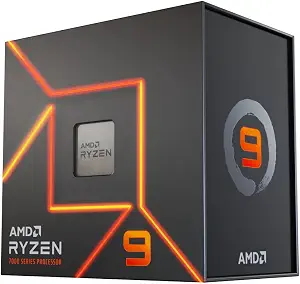
AMD Ryzen 9 7900X 12-Core, 24-Thread Unlocked Desktop Processor
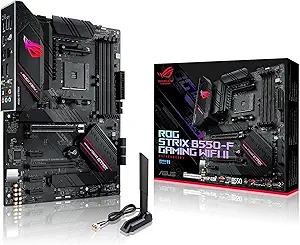
Asus ROG Strix B550-F Gaming WiFi II AMD AM4 (3rd Gen Ryzen) ATX DDR4 Gaming Motherboard
Best Pc Part Buying Guide — Black Friday Deals 2026
A useful PC part shortlist begins with fit, not a seasonal banner. Decide which platform your build is meant to use, then compare parts on the details that matter for that choice: processor socket, board connections, or power-supply specifications. The products here serve different roles, and they are not interchangeable answers to one upgrade question. Black Friday can make a listing worth a closer look, but it does not change a socket or establish that a part suits your complete system. Use this guide to identify the relevant features, note what you still need to verify, and compare the exact item and variant shown before deciding.
AMD Ryzen 9 7900X 12-Core, 24-Thread Unlocked Desktop Processor
Check Price on Amazon
Best Overall is an editorial label for this processor among the listed options, not a claim of measured superiority. Its 12-core, 24-thread specification makes it a candidate to consider when you want a desktop processor with substantial thread capacity on the AM5 platform. Those figures can help you frame a shortlist for a PC used across several kinds of work, but they do not guarantee a particular result in any application. Think about the software you actually use and check its requirements rather than treating core and thread counts as a promise of speed.
The cache details are 12 MB L2 plus 64 MB L3, and the listed process technology is 5 nm. These are useful identifiers when comparing processor records, but they are not a substitute for checking the rest of a configuration. The processor uses Socket AM5, so establish that socket as part of your platform decision before considering it for a build. Do not pair it with a board simply because both parts are made for AMD processors: the socket details need to line up. The listed Asus board in this guide has an AM4 socket, so it is not the matching socket choice for this processor.
An AMD Radeon Graphics controller is listed. Treat that as a specification to verify against your intended setup, not as a guarantee that it covers every graphics task or connection you need. Likewise, the processor name identifies it as unlocked, but this guide does not make claims about results from changing settings. Before Black Friday checkout, compare the exact processor listing with your motherboard choice and the requirements of your intended workload. Check that the offer is for this AM5 processor, then consider the other parts your build still requires. This is a thoughtful shortlist pick when the platform and core-and-thread profile fit your plans; it is not a complete system recommendation by itself.
Key specs
| Processor socket | Socket AM5 |
| Processor cores | 12 Core |
| Concurrent threads | 24 |
| Cache | 12 MB L2 plus 64 MB L3 cache |
| Process technology | 5 nm process technology |
| Graphics controller | AMD Radeon Graphics controller |
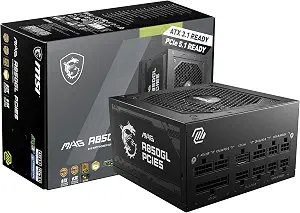
MSI MAG A850GL PCIE5
Best Budget is an editorial designation within this small selection; it does not establish a price advantage or a discount. This power supply is an option to examine when your build plan calls for an ATX unit with an 850-watt output. Whether that capacity is appropriate depends on the complete parts list, so do not select it from the wattage figure alone. Check the requirements of the processor, graphics hardware, storage, and other components you intend to use, then compare that plan with the power supply’s specifications.
The listed certification is 80+ Gold, and the design is fully modular. Modularity may be a useful preference when planning which cables to use in a build, but the specification alone does not tell you how any particular case or cable route will work. The unit is ATX form factor, a detail to check against the case and build plan rather than assume from the product category. It is also described as ATX 3.1 and PCIe 5.1 Ready, with a Native Dual-Color 12V-2×6 Cable. If those details matter to your chosen components, verify that the exact listing and variant include the configuration you intend to buy.
For Black Friday, assess this item as a component in a system, not as a standalone wattage bargain. Compare its output, form factor, standards, and cable details against your actual parts and case. The provided specifications do not establish that it fits every build, nor do they state what other cables or accessories are included. Keep those open questions on your cart checklist and look at the exact offer before placing an order. This pick is most relevant when its listed power and connection details align with your build plan; if you cannot yet define that plan, settle the other components first.
Key specs
| Certification | 80+ Gold |
| Design | Fully modular design |
| Output wattage | 850 watts |
| Standards | ATX 3.1 & PCIe 5.1 Ready |
| Cable | Native Dual-Color 12V-2×6 Cable |
| Form factor | ATX |
Asus ROG Strix B550-F Gaming WiFi II AMD AM4 (3rd Gen Ryzen) ATX DDR4 Gaming Motherboard
Check Price on Amazon
Best for AM4 WiFi 6E Builds describes the specific appeal of this board among the options here; it is an editorial label, not a test result. Its AM4 socket is listed as ready for AMD Ryzen 3000 and 5000 series, plus 5000 and 4000 G-series desktop processors. That is the compatibility information to use when checking a planned processor. The AMD Ryzen 9 7900X elsewhere in this guide uses Socket AM5, so these two listed parts are not a socket match. Keep the processor and board together on your shortlist to catch platform mismatches early.
For a wireless setup, the board lists onboard WiFi 6E (802.11ax). It also specifies Intel 2.5 Gb Ethernet, giving shoppers a wired-networking detail to weigh alongside wireless needs. These are not reasons to choose the board without considering your desk, network, and other parts. If you rely on a wired connection, note the Ethernet specification; if onboard WiFi 6E matters to you, make sure you are comparing this exact board rather than another similarly named listing.
The board has dual M.2 slots and USB 3.2 Gen 2 Type-C. Those details may help you assess storage plans and devices you expect to connect, but they do not answer every question about your desired configuration. Check the exact listing for the board variant, and verify any additional requirements that matter to your build. During Black Friday, the AM4 socket and stated processor families are particularly useful checks: a seasonal offer is only relevant if the platform fits. This is a focused option for shoppers who have chosen an AM4 build and value the listed WiFi 6E feature, not a universal motherboard recommendation.
Key specs
| Processor socket | AM4 socket |
| Compatible processors | Ready for AMD Ryzen 3000 and 5000 series, plus 5000 and 4000 G-series desktop processors. |
| Wireless networking | On-board WiFi 6E (802.11ax) |
| Ethernet | Intel 2.5 Gb Ethernet |
| M.2 slots | dual M.2 slots |
| USB-C | USB 3.2 Gen 2 Type-C |
Set the platform before narrowing the shortlist
Start by writing down the processor platform you intend to build around. In this selection, the Ryzen processor is Socket AM5, while the Asus board is AM4. That distinction is decisive when considering those two parts together: their sockets do not match. The board’s stated processor families give you a separate way to check whether an AM4 processor belongs on its shortlist. Do not let a familiar brand name or a similar product category substitute for this check.
Once the platform is clear, keep a compact comparison note with the intended processor and motherboard details. Include the exact socket and the board’s stated compatibility information, then revisit it whenever a Black Friday listing draws your attention. If you have not chosen a processor yet, decide which platform is central to the build before comparing individual board conveniences. That order prevents a wireless feature or a prominent seasonal label from distracting you from basic fit.
This staged approach also helps when you are replacing one part rather than planning a full system. Identify the existing platform and the component you are changing, then verify the candidate against the relevant requirements. The available facts here do not describe every possible compatibility question, so keep any unanswered requirements visible instead of assuming them. A shortlist with one clear platform is easier to compare than a cart containing attractive but incompatible parts.
Use processor details as workload clues
After establishing the platform, consider whether the processor’s listed profile suits the kinds of tasks you expect from the PC. The Ryzen option is identified as a 12-core, 24-thread processor, with 12 MB L2 plus 64 MB L3 cache and a listed 5 nm process technology. Treat these as specifications for comparing candidates, not as guarantees about how quickly a particular program will run. The useful question is whether the processor belongs on your shortlist, given your software and intended use.
If your routine spans several applications, note the core and thread counts alongside the requirements published for those applications. If your priorities are different, those counts may carry less weight than the platform, board, or other parts you still need to select. The AMD Radeon Graphics controller is another listed detail to assess against your plans; its presence alone does not establish that it meets every graphics or display need.
Black Friday browsing can encourage quick comparisons based on a headline specification. Slow that decision down: verify the exact processor model, socket, and listing, then compare the offer with the requirements you already wrote down. Do not infer a performance outcome from one specification, and do not treat the unlocked wording as a promise about results. A short, use-focused comparison is more useful than collecting numbers without knowing what role they play in your build.
Check the power supply against the full parts plan
A power supply should be considered in relation to the complete configuration. The MSI option lists 850 watts of output, but that figure by itself cannot establish whether it is right for your system. First identify the components you plan to install, then check their requirements and compare them with the supply’s stated output. If important parts of the build are undecided, treat the power choice as provisional rather than assuming one capacity is suitable for every PC.
Next, compare practical fit details. This unit is ATX form factor, so check the case and build plan rather than relying on a general assumption about physical fit. Its fully modular design and Native Dual-Color 12V-2×6 Cable are listed features to consider alongside the components you intend to connect. The record does not specify every cable or accessory in the package, so verify the exact listing if a particular connection or included item matters to you.
The 80+ Gold certification and ATX 3.1 and PCIe 5.1 Ready specifications can also help distinguish this listing from other candidates. They do not answer the whole build-fit question. For Black Friday, keep a checklist of the required output, form factor, relevant standards, and cable needs, then compare those points with the exact item in your cart. That makes the seasonal offer a prompt to review the part, not a substitute for planning.
Choose board connections around real devices
Once the socket is settled, decide which board features have a job in your setup. The Asus board lists onboard WiFi 6E (802.11ax) and Intel 2.5 Gb Ethernet. Think about whether wireless networking or a wired connection matters at your desk, and use the specifications to compare the board with your needs. Neither connection detail should distract from the AM4 platform boundary or the board’s stated processor compatibility.
Storage and peripheral plans add another layer. This board lists dual M.2 slots and USB 3.2 Gen 2 Type-C. Note whether those are relevant to the devices and storage you intend to use, then verify any remaining requirements against the exact board listing. The provided details do not establish every connector or feature a build might need, so do not assume that a short specification list resolves all setup questions.
During Black Friday, it is easy to focus on a feature that sounds useful in isolation. Rank your requirements instead: platform fit first, connections you expect to use next, and optional conveniences after that. If WiFi 6E is a priority, the board’s stated feature gives you a clear comparison point. If another connection matters more, make that need explicit before choosing. This turns a long feature list into a practical filter rather than a collection of attractive terms.
Compare the exact Black Friday item in your cart
A seasonal label does not tell you whether a listing is the part you intended to compare. Before checkout, confirm the product identity and exact variant, then revisit the facts that drove your choice. For a processor, check the socket and listed processor details; for a motherboard, check its socket, stated compatibility, and the connections you value; for a power supply, check output, form factor, standards, and cable details. This simple review helps prevent a promising headline from standing in for a fit check.
Also separate known details from questions you still need answered. The product information here does not provide prices, active promotions, package contents beyond the specified cable detail, or every compatibility requirement for a complete build. Do not fill those gaps with assumptions. If a particular item or connection is essential, inspect the exact listing and confirm that it is the version you mean to buy. Compare the offer on those terms rather than relying on broad category wording.
Before finalizing a Black Friday cart, read back your shortlist as a connected system: the selected processor platform, the board that matches it, and a power supply assessed against the complete parts plan. A component can be appealing on its own and still be wrong for the configuration. If the cart has changed since you made your notes, repeat the checks. The goal is a deliberate purchase based on fit and useful features, not a rushed decision driven by the season.
Make your Black Friday choice
A strong PC part decision follows a clear sequence: establish the platform, choose features that support your actual setup, and verify the exact listing before checkout. The processor, motherboard, and power supply here each answer a different question, so compare them in the context of the build rather than as substitutes. Black Friday may be a useful time to revisit a shortlist, but the offer still needs to match your requirements. Keep any unresolved compatibility or listing questions visible, and choose only when the part’s stated details align with the system you intend to assemble.